


In areas where Universal Credit has been rolled out for at least a year, food banks in the Trussell Trust’s network have seen a 30% increase in demand. In areas with the new system for at least 18 months this jumps to 40%, and increases again to 48% for food banks in areas with Universal Credit for at least two years.
The Trussell Trust is urging the government to end the five-week wait** for Universal Credit, as it publishes a new report revealing the longer the new benefits system has been rolled out in an area, the more people are plunged into poverty.
The charity highlights that while the Department for Work and Pensions has attempted to find solutions to issues with Universal Credit, the wait for a first benefit payment, which is often longer than five weeks, is continuing to cause unnecessary hardship. Government loans, which are currently offered during the wait, are also pushing more people into debt, the charity says.
The Trussell Trust’s chief executive Emma Revie said “Universal Credit should be there to anchor any of us against the tides of poverty. But the five-week wait fatally undermines this principle, pushing people into debt, homelessness and destitution.”
“In a society that believes in justice and compassion, this isn’t right. But it is something that can be fixed. Universal Credit was designed to have a wait. Now it’s clear that wait is five weeks too long, and we must change that design.”
“The recent Spending Review was a lost opportunity to protect people on the lowest incomes. Our Prime Minister must take action to end this wait, and help prevent thousands more of us being swept away by poverty. With the nation at a crossroads, now is the time to loosen the grip of poverty and make sure Universal Credit is able to protect people from needing a food bank, instead of pushing them to one.”
A similar pattern of financial hardship in areas where Universal Credit has rolled out is revealed by new evidence in the report from the Riverside Group, a large provider of social housing and homelessness services.
On average, people claiming Universal Credit at July 2019 had experienced a 42% increase in rent arrears since the rollout began in 2015. By stark contrast, those claiming Housing Benefit (the previous ‘legacy’ benefits system) experienced a 20% decrease, analysis shows.
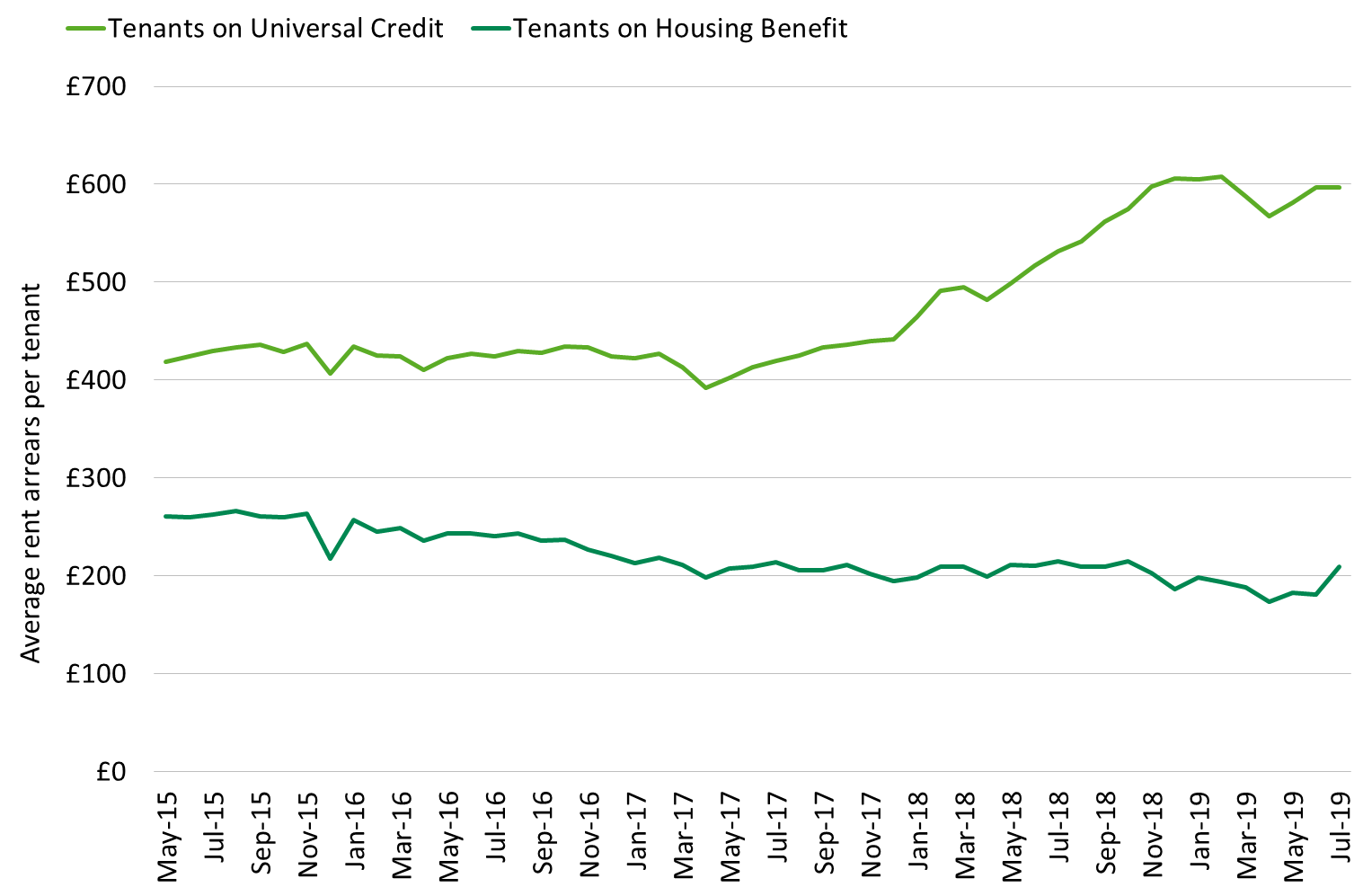
Hugh Owen, Director of Strategy and Public Affairs at Riverside said “Riverside is calling on the government to end the five week wait for Universal Credit because increasing numbers of our tenants are experiencing hardship while waiting for their first payment. Our data clearly shows that the wait is causing many of our tenants to get into rent arrears which can take months or even years to clear.”
“A recent survey of many of our tenants told us that they are struggling to keep afloat when they move onto Universal Credit; the long wait means that many people are going without food or heating and they are forced to use foodbanks in order to feed their families. We welcome the simplicity that moving to an integrated benefit is intended to bring, but the way Universal Credit is being implemented means that instead of acting as a safety net, it is dragging people into debt.”