
Credit, Collections & Insolvency News

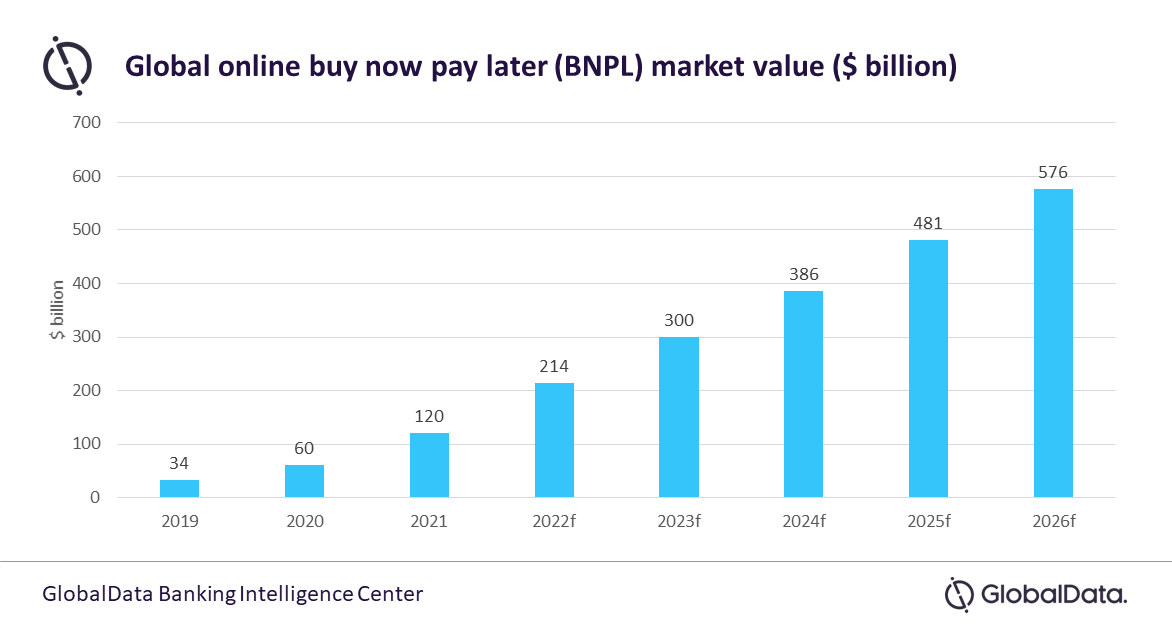
Buy Now Pay Later (BNPL) popularity as an alternative payment option, has been highlighted by GlobalData’s latest report, revealing that the global transaction value for BNPL payments reached $120 billion in 2021, and is set to reach $576 billion by 2026.
BNPL made up 2.3% of the global ecommerce market, or, in other words, for every $100 spent, $2 went towards a BNPL transaction.
The report points out that regulations need to be put in place quickly, so issues surrounding credit scores can be rectified before BNPL becomes a leading payment option.
Chris Dinga, Payments Analyst at GlobalData’s said “BNPL is booming in popularity, with the transaction value growing almost four fold between 2019 and 2021—$33 billion to $120 billion. This rapid growth was down to an increasing number of merchants accepting these solutions. There have been some huge partnerships with ecommerce giants such as Amazon and Shopify, opening up a whole new world of consumers.”
“Millennials and Generation Z are attracted to the simplicity and speed of BNPL loans, as well as their interest-free nature. Even though banks are taking steps to appeal to younger generations, their efforts are falling short.”
“The popularity of the sector is raising concerns from regulators. Since the release of the Woolard report by the Financial Conduct Authority in 2021, the FCA has been trying to bring the UK BNPL sector under its supervision. In February 2022, the FCA was able to force Klarna, Clearpay, OpenPay and Laybuy to change their terms and conditions so they are easier to understand.”
“Due to the lack of transparency of BNPL loans, credit rating agencies such as Experian and TransUnion are unable to capture BNPL loans. This lack of reporting could lead to an inaccurate assessment of consumers’ creditworthiness and lead to them being over leverage on their loans (as they can be approved for loans with multiple BNPL loan providers at the same time).”
“In the UK, Klarna is working on tackling this issue, as it reported that from June 2022, it will share BNPL transactions with Experian and TransUnion. This decision marks a solid step towards providing more transparency, and will hopefully protect vulnerable consumers from being offered loans they cannot afford to repay. Further, it will help allow consumers who rely on BNPL loans to maintain or build their credit score, which is currently impossible.”