Credit, Collections & Insolvency News

The UK economy is projected to experience only modest growth over the next two years, according to a report by KPMG.
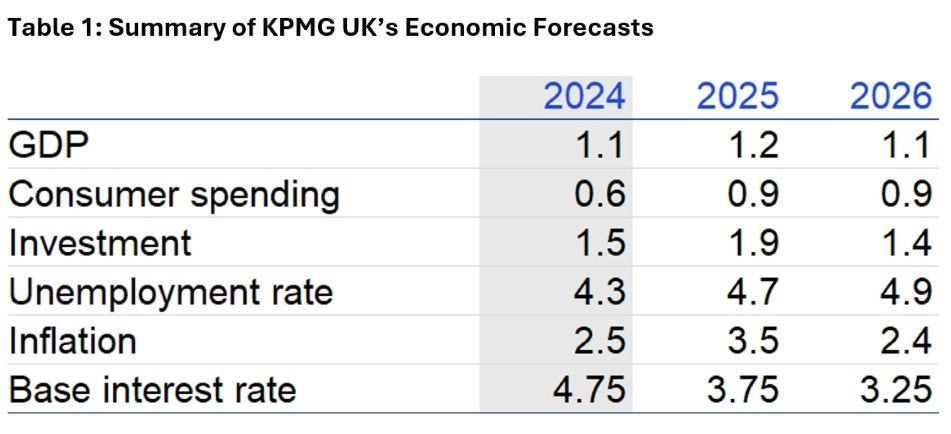
The firm forecasts a rise of only 1.2% this year and 1.1% in 2026, significantly lower than the Office for Budget Responsibility’s earlier estimate of 1.9% driven by lower interest rates and infrastructure investment, persistent global and domestic challenges are anticipated to drag on economic performance.
Meanwhile, consumer spending growth is projected at below 1% in both 2025 and 2026, as households gradually reduce savings in response to falling interest rates.
Trade disruption is also a factor. Exports to the US dropped 21% year-on-year by mid-2025 following the imposition of new US tariffs, reversing early gains in Q1.
Inflation is expected to peak at 4% this autumn, with high food prices, labour costs and lingering global supply shocks all adding pressure. Domestic services inflation remains particularly stubborn, with higher employer National Insurance contributions feeding through to prices. KPMG UK forecasts inflation will return gradually to the Bank of England’s 2% target by the mid 2026, helped by easing import costs from a stronger pound and falling oil prices.
Despite elevated inflation, the Bank of England is still anticipated to lower interest rates once more in 2025, bringing the base rate to 3.75% by year-end. Two additional cuts are projected in 2026, taking the rate down to 3.25%.
Yael Selfin, Chief Economist at KPMG UK, said While the economy showed resilience at the start of the year, the second half looks more uncertain. Elevated tax burdens, weaker global trade and cautious consumers are likely to keep growth subdued into 2026.
“With inflation set to remain above target in the near term, the Bank is likely to proceed cautiously. However, with growth slowing and labour market slack increasing, further easing looks likely.”