Credit, Collections & Insolvency News

New Ofcom research reveals the challenges and tough choices many telecoms customers are facing this year, with more action needed from the industry to support customers in financial difficulty.
Ofcom says that reliance on phone and broadband services has increased significantly in recent years, and this trend accelerated in 2020 as people continue to spend more time at home. So continued investment in upgrading the UK’s networks is vital.
The regulator says that generally, broadband and mobile customers are getting better services for less money. Average internet speeds and data usage have risen significantly, while the average household spend on telecoms has been going down in recent years.
However, the coronavirus pandemic has significantly affected many people’s finances. So it has never been more important to ensure that people who are struggling to pay get the support they need, and have affordable options available to them.
In March, the UK’s major broadband and mobile companies agreed a set of commitments with Government and Ofcom to support and protect vulnerable customers.
Ofcom research has indicated that most people connect to the internet at home through a fixed-line going into their property. But for 7% of households, their only method of accessing the internet is through a mobile phone or other mobile devices, such as a dongle or USB.
Nearly one in five households (19%) – around 4.7 million homes – struggle to afford their telecoms services,. Six per cent have difficulties paying for their fixed home broadband, while 5% struggle with their mobile bill.
When struggling to pay for a service, the most common action taken by customers is to cut back on a package to make it more affordable – something 11% of households say they have done. Other steps include reducing spend on other items such as food and clothes (5%), cancelling a service (4%), missing a payment (2%) or changing payment method (2%).
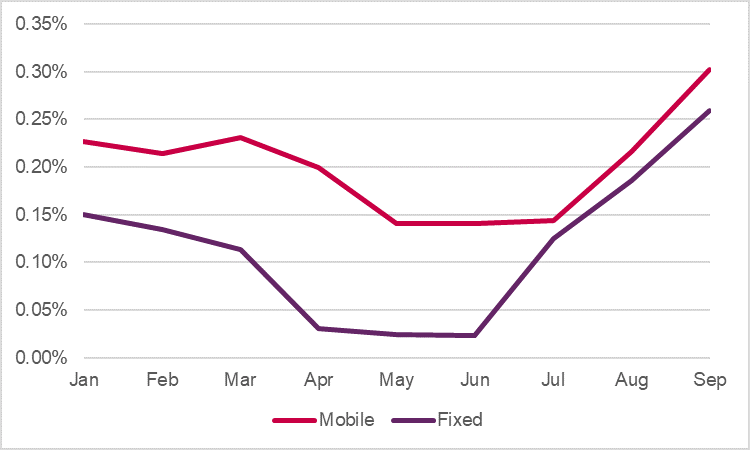
Data from providers indicates that the proportion of customers in arrears was relatively stable between January and September (2% for broadband and 3% for mobile). While the proportion of customers disconnected for non-payment fell during the initial lockdown period, there was an increase between June and September, to higher levels than before the pandemic.
The broadband and mobile markets offer customers a wide range of choice, with different deals available to suit different needs. For example, superfast broadband is available from under £25 a month, but people can also choose to pay more for a faster service.
But people suffering financial hardship can struggle with their bills. Some broadband providers – such as BT, KCOM and Virgin Media – offer cheaper tariffs to help customers on low incomes, but relatively few customers have taken up one of these targeted affordable options.
Ofcom said it would welcome the swift action taken by providers in response to the pandemic, but there is more they can do to support their customers and wants firms that do not already offer a targeted affordable tariff for customers on low incomes to consider doing so. Providers that do offer such packages should do more to promote them, to try and raise awareness among customers who are likely to be eligible.
Lindsey Fussell, Ofcom’s Networks and Communications Group Director, said “Lockdown has laid bare our dependence on a reliable internet connection. So it’s important that affordable options are available so everyone can stay connected – particularly those who have fallen on hard times.”
“And while we welcome the support companies have provided customers this year, some people continue to face challenges and it’s clear providers can do more to support customers who are in financial difficulty.”
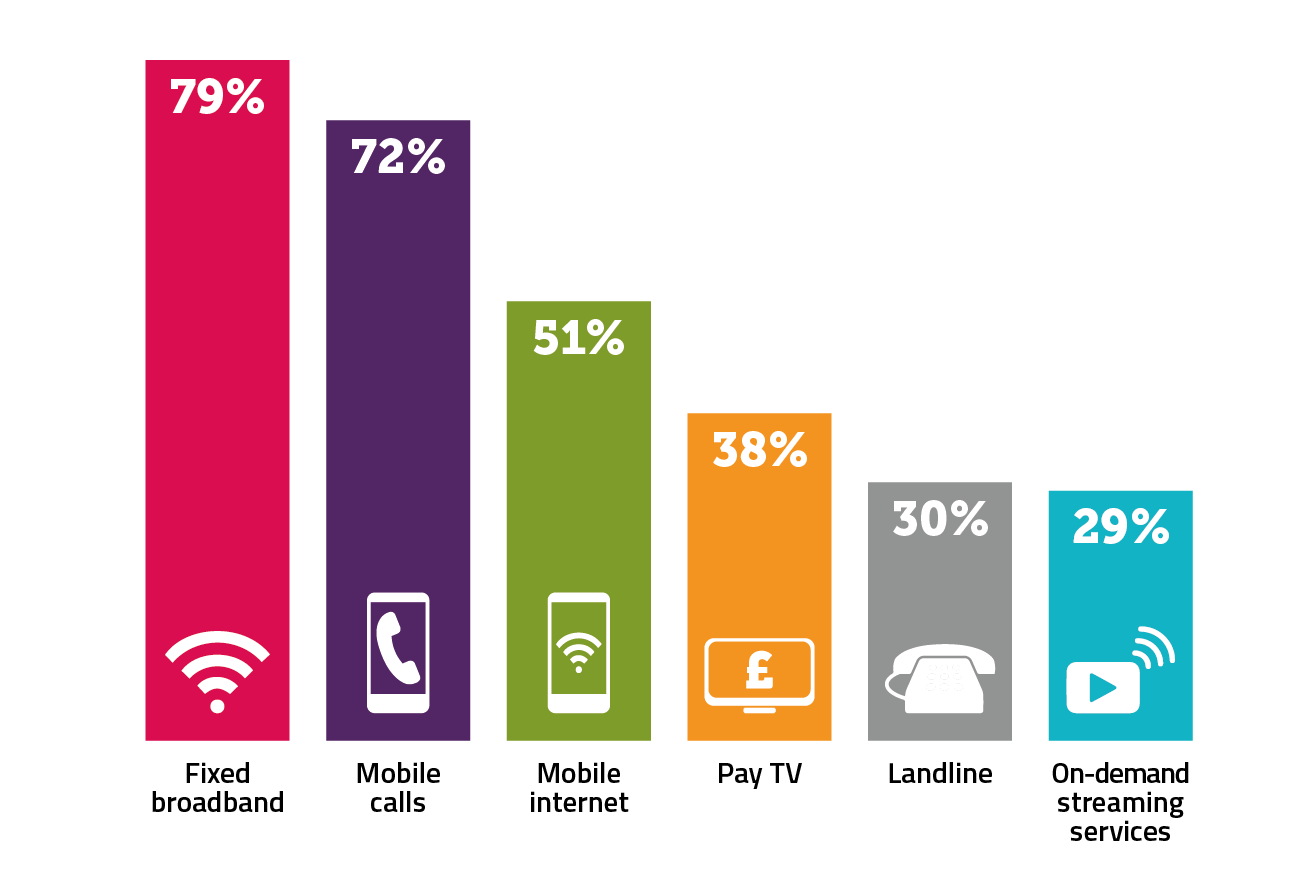
Table: Proportions of households describing each of their communications services as ‘very important’:
Table; Proportion of total mobile and broadband customers disconnected for non-payment: