Credit, Collections & Insolvency News

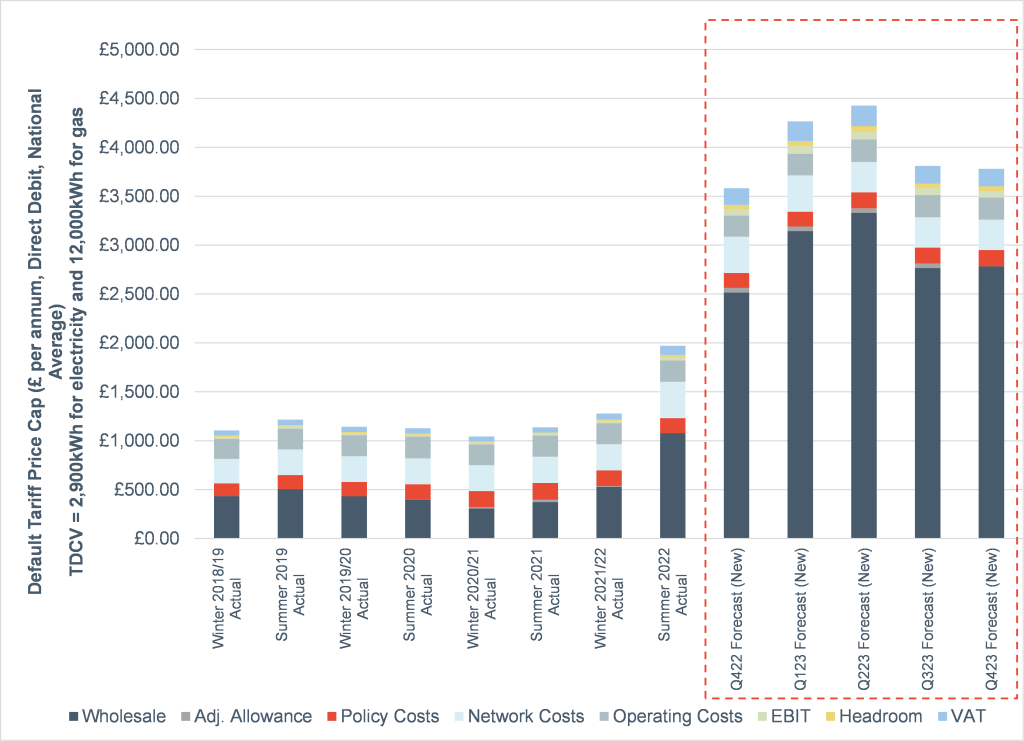
Energy bills for a typical household could hit £4,266 next year, according to new predictions by Cornwall Insight.
The higher estimate means the average household would be paying £355 a month, instead of £164 a month currently.
Cornwall Insights says that the increase in forecasts since last month reflects both the increase in the wholesale market in the intervening period and – crucially in the case of the Q1 2023 (January-March) and Q2 2023 (April-June) forecasts – a change in calculation methodology set for finalisation by Ofgem. In its initial proposals from May, the regulator stated that an element of supplier costs associated with wholesale market hedging would be explicitly included within the cap methodology and would be recoverable over a 12-month period. However, in the consultation documents released last week, it was confirmed that these costs would be recoverable over a six-month period – resulting in higher bills than previously forecast for the crucial January cap.
The research notes Ofgem’s concerns in agreeing to the application and structure of these additional backwardation2 costs, as these reflect the suppliers’ wholesale energy trading requirements and recovery of these is essential to help avoid more supplier failures. If the wholesale market remains unchanged, this change in methodology should result in lower bills in the second half of next year than we had previously forecast. These new forecasts for the January to March 2023 quarter further underline the need for support for households who will struggle to pay their energy bills this winter.
Dr Craig Lowrey, Principal Consultant at Cornwall Insight said “While our price cap forecasts have been steadily rising since the Summer 2022 cap was set in April, an increase of over £650 in the January predictions comes as a fresh shock. The cost-of-living crisis was already top of the news agenda as more and more people face fuel poverty, this will only compound the concerns.”
“Many may consider the changes made by Ofgem to the hedging formula, which have contributed to the predicted increase in bills, to be unwise at a time when so many people are already struggling. However, with many energy suppliers under financial pressure, and some currently making a loss, maintaining the current timeframe for suppliers to recover their hedging costs could risk a repeat of the sizable exodus seen in 2021. Given that the costs of supplier failure are ultimately met by consumers through their energy bills, a change which means that this is less likely is welcome, even if the timing of it may well not be.”
“Rather than critiquing the methodology of the cap, it may be time to consider the cap’s place altogether. After all, if it is not controlling consumer prices, and is damaging suppliers’ business models, we must wonder if it is fit for purpose – especially in these times of unprecedented energy market conditions.”
“It is essential that the government use our predictions to spur on a review of the support package being offered to consumers. If the £400 was not enough to make a dent in the impact of our previous forecast, it most certainly is not enough now. The government must make introducing more support over the first two quarters of 2023 a number one priority. In the longer-term, a social tariff or other support mechanism to target support at the most vulnerable in society are options that we at Cornwall Insight have proposed previously. Right now, the current price cap is not working for consumers, suppliers, or the economy.”
Cornwall Insight’s default tariff cap forecasts, £ per year including VAT (dual fuel, direct debit customer, national average figures)