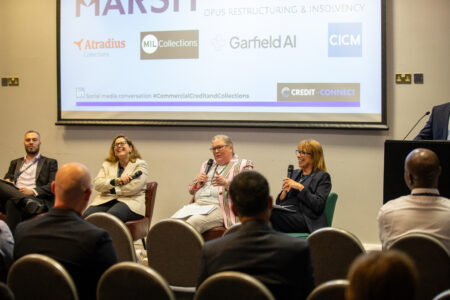


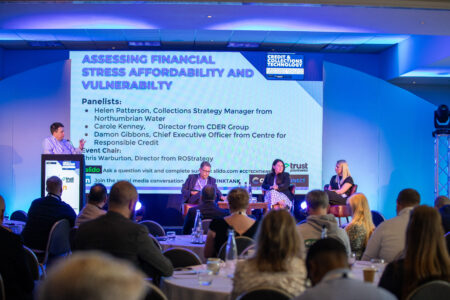
Spring Credit & Collections Think Tank

Key takeaways
- Firms are operating in a volatile affordability environment, with cost of living, fuel, energy, groceries, inflation, tariffs and geopolitical pressures expected to affect customer resilience.
- Credit and collections strategies need to move upstream, with stronger pre-arrears models, earlier engagement and prevention-led interventions.
- Firms cannot necessarily rely solely on CRA or ONS data because affordability and sustainability indicators are moving too quickly.
- Consumer Duty remains the central regulatory lens, requiring firms to evidence decisions, support, outcomes and rationale.
- Regulation was viewed as increasingly a challenge to manage because definitions can be unclear, retrospective and shaped through enforcement or court outcomes.
- Front-line collections teams face significant pressure from overlapping regulatory, client and sector-specific requirements.
- Customers are increasingly using self-service, apps and portals, partly to avoid difficult conversations.
- Debt stigma remains a core barrier to engagement, particularly for customers experiencing financial difficulty for the first time.
- Utilities and enforcement organisations are seeing more customers under stress, including customers using credit cards to pay essential bills.
- Data sharing between government, utilities, councils and firms is a major opportunity to identify customers who need support before arrears escalate.
- AI is seen as useful for agent support, speech analytics, complaints handling, data analysis and productivity, but risky when used without governance or directly in complex vulnerable customer journeys.
- The future operating model needs flexible systems, better data, tailored engagement, stronger governance and human escalation where empathy or judgement is required.
Innovation
- Digital engagement channels to allow customers to seek help without needing to speak directly to an agent.
- Pre-arrears modelling to identify customers likely to become unaffordable or vulnerable.
- Use of alternative datasets and overlays where traditional affordability data is too slow.
- AI prompts to help agents navigate policy, process, ID&V and regulatory requirements.
- Speech analytics to identify call issues and escalate them quickly to team leaders.
- AI-supported complaints handling to review cases end-to-end and improve final responses.
- Data lakes and reconciliation projects to support Product Sales Data reporting.
- DWP data sharing to identify eligibility and automatically apply water bill reductions.
- Lightning Reach QR codes and referral routes to connect customers with wider support.
- I&E journeys used not only for affordability assessment but also as an engagement tool.
- RCS and button-led messaging to reduce friction and make customer responses easier.
- Behavioural science and personalisation to tailor contact timing, channel and language.
- Portal and app journeys to support self-service while allowing customers to move to human support when needed.
- Use of AI to prompt agents to ask additional vulnerability questions during calls.
- Use of visual timelines and reminders, such as for Breathing Space expiry, to help customers understand next steps.
Key Statistics
- Inflation was discussed as potentially reaching around 6%.
- Diesel was discussed as potentially rising to around £2.30.
- Around 35%–40% of customers were said to self-serve.
- One water-sector organisation supports over 200,000 customers with reduced bills of up to 50%.
- Around a quarter of those surveyed could not meet the cost of essentials in all months of the year.
- One in ten could rarely or never meet the cost of essentials in every month of the year.
- A further 44% were just about managing essentials but had no money left afterwards.
- Together, nearly three-quarters of the lower-to-middle-income population had no money left.
- Around 65% of enforcement cases referred involved individuals the organisation had seen before.
- Around 4,000 customers were identified as potentially vulnerable and needing longer-term repayment support.
- Around 140 criteria had previously been reviewed to assess propensity and ability to pay.
- Around 60% of customers enquiring about discounted water products had never missed a payment.
- A SAP study was referenced stating that 98% of people read a text message.
- The same study was referenced as saying 43% respond to linked marketing material within around 72 hours.
Key Discussion Points
- How firms should anticipate financial shocks before customers fall into arrears.
- How to balance financial inclusion with affordability and sustainability of lending.
- Whether prevention should receive more focus than cure in regulatory and collections practice.
- How firms should evidence decisions when outcomes may later be judged retrospectively.
- How financial education could help consumers understand credit, arrears and support options earlier.
- Whether BNPL and short-term credit create additional risks when used for low-value or everyday spending.
- How Consumer Credit Act reform could replace prescriptive requirements with FCA outcomes-based rules.
- How Product Sales Data reporting gives the FCA greater visibility but creates operational and data challenges.
- How water companies, councils and enforcement firms can identify customers who are not yet visibly in arrears.
- How social tariffs, debt write-off and discounted bills can help, while still facing awareness and engagement barriers.
- How affordability assessments should balance robustness, simplicity and customer burden.
- How data sharing between DWP, HMRC, councils and firms could reduce customer friction.
- How to manage customers who use credit to maintain access to essentials or protect credit scores.
- How firms should respond to AI-generated complaints containing irrelevant or excessive legal arguments.
- Where AI should sit in the operating model: agent support, not autonomous decision-making.
- How to prevent AI-on-AI interactions that extend complaints or reduce human understanding.
- How firms can use channel preference, timing and behavioural data to improve engagement.
- Whether mandatory letters should be reduced or simplified as part of regulatory reform.
- How the industry can reduce debt stigma and promote positive engagement stories.
- How many contact channels firms should operate, and whether RCS can replace or improve SMS.
Thanks to sponsors: Flexys, TCN, Trust Payments